When you think about installing hardwood floors, you might focus on the wood type, stain color, and finish. But the real magic happens underneath, where proper subfloor preparation lays the groundwork for a stunning final result. A well-prepared subfloor keeps your hardwood installation solid and helps prevent those annoying squeaks, gaps, and uneven boards.
Planning a new flooring project, or maybe weighing options like vinyl or laminate? Knowing how subfloor prep works can guide you in making smart choices. In this guide, we’ll dive into why subfloor preparation is key, what best practices look like, and how the pros ensure a stable, moisture-resistant base before any planks go down. For more planning tips, you might also check out our flooring project planning guide.
The National Wood Flooring Association says that a hardwood floor is only as good as what it's sitting on. Moisture testing, flatness, and cleanliness are crucial to preventing problems. Dive deeper with resources from the NWFA and the U.S. Environmental Protection Agency on indoor air quality to see why these factors matter in finished interiors.
Why Subfloor Preparation is Crucial for Hardwood Floors
It Supports the Entire Floor Structure
Hardwood floors look great on top, but they work as a system. If the subfloor isn’t clean, flat, dry, and sound, the hardwood has to make up for those issues. This can stress the joints, cause noise when you walk, and shorten the floor's lifespan. A well-prepared subfloor spreads weight evenly and gives the boards a stable place to attach.
This is especially true in homes with lots of foot traffic, heavy furniture, or open floor plans where even small flaws can stand out. Even a tiny dip or bump can show once the hardwood is down. Proper prep isn’t just an extra step; it protects your whole investment. Done right, you’ll get fewer callbacks, happier customers, and a polished finish.
It Helps Prevent Common Hardwood Issues
Many hardwood complaints start before the flooring even goes in. Squeaks often come from loose or uneven subfloors. Gaps show up when moisture conditions are ignored. Cupping and warping can occur if the wood and subfloor weren’t acclimated properly. These issues are more than just cosmetic; they can lead to costly repairs or even the need to replace parts of the floor.
That’s why seasoned contractors treat prep as quality control. If you’re thinking about a full replacement, services like floor removal and floor repairs might be necessary before new hardwood goes down. Handling the base correctly now saves time later and helps the new floor perform as it should.
What Proper Subfloor Preparation Involves
Moisture Testing and Humidity Checks
Moisture is a big threat to hardwood floors. Wood expands and contracts with humidity changes, and a wet subfloor can cause major movement after installation. Generally, wood subfloors should be under 14% moisture content, with no more than a 4% difference between the subfloor and flooring. Concrete subfloors need different tests, like calcium chloride or in-situ probes, to ensure safe levels before installation.
Professional moisture testing isn’t guesswork. Installers use moisture meters and follow manufacturer guidelines to see if the surface is ready. In areas with seasonal changes, this step is even more crucial. The local climate can introduce enough fluctuation to impact the floor if the prep stage is rushed. For homeowners, working with a qualified flooring contractor who doesn’t skip these detailed checks is a smart move.
Flatness and Leveling
A flat subfloor doesn’t have to be perfectly level, but it must meet the tolerance required for hardwood installation. A common standard is no more than 3/16 inch of variation over a 10-foot span. Anything beyond that increases the risk of movement, weak fastening, and visible flaws in the finished surface.
Installers often sand down high spots and fill low areas with a self-leveling compound. New advances in flooring technology have made these materials easier to use and more reliable than older methods. If the floor has major issues, the contractor might suggest replacing damaged areas or doing more extensive leveling before moving forward. This is one reason why professional hardwood flooring projects often look more seamless than rushed installations.
Cleaning and Surface Preparation
Even if a subfloor is dry and flat, it still needs a good cleaning. Dust, debris, old adhesive, and bits of previous flooring can mess with adhesion or create uneven pressure points under new boards. Cleaning isn’t just cosmetic; it’s essential for performance.
For many projects, especially renovations, installers might need to remove old flooring completely before proceeding. That lets the team inspect the base, repair damage, and start fresh. If existing materials are sound but not ideal for a new hardwood system, underlayment choices and adhesive compatibility need careful review.
Modern Materials and Trends in Subfloor Prep
Moisture-Resistant Underlayments
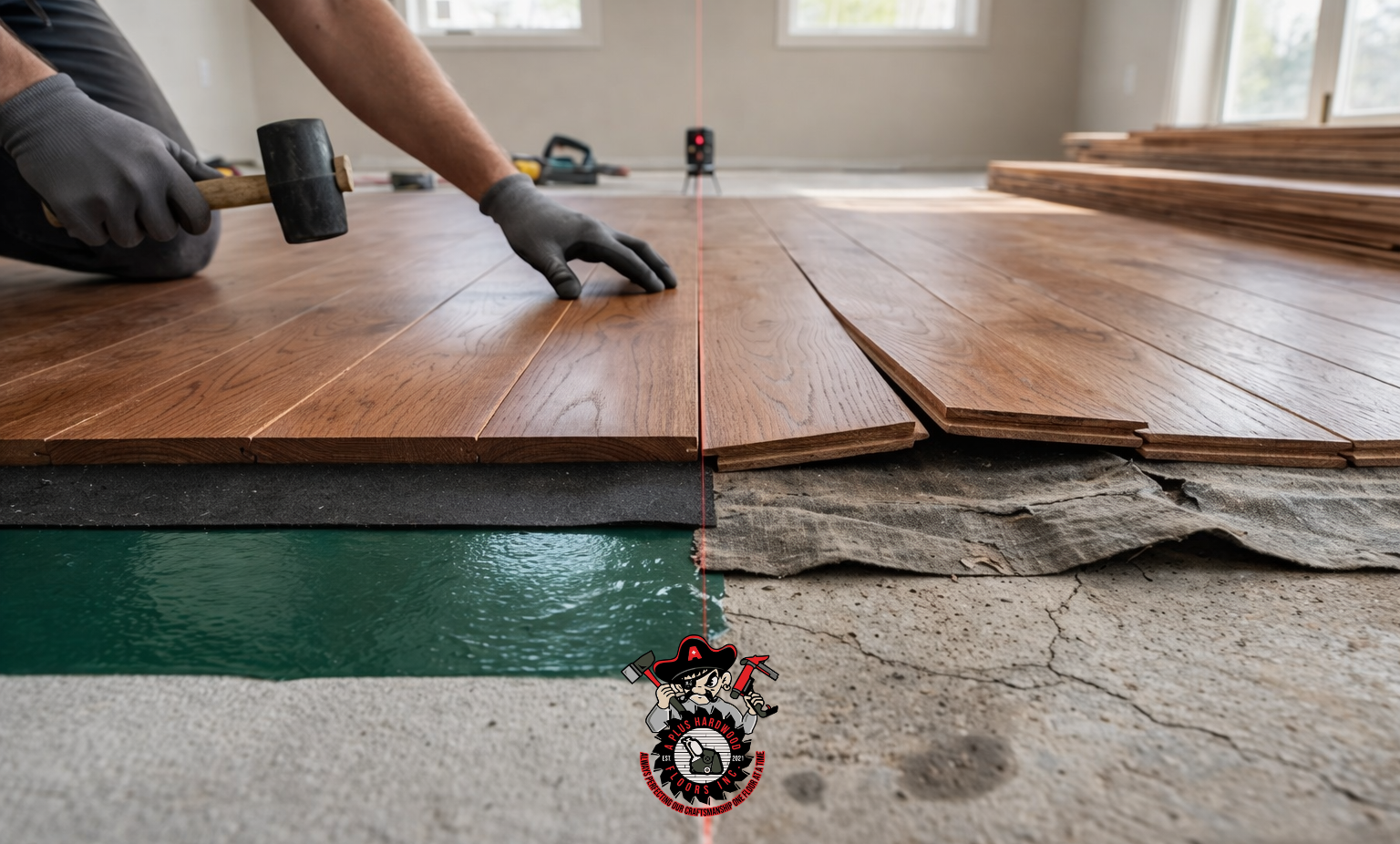
A big trend in hardwood installation is using moisture-resistant underlayments. These products add a layer of protection between the hardwood and subfloor, especially over concrete slabs or in areas with mild moisture risk. They help reduce vapor transfer and improve overall comfort underfoot.
This trend shows a shift toward durability and long-term stability. Instead of relying only on traditional methods, installers now have materials that improve resilience and simplify the installation process. For homeowners, this means a better chance of avoiding moisture-related issues that could affect the floor over time.
Advanced Flooring Adhesives
Adhesive technology has come a long way. Today’s hardwood adhesives offer stronger bonds, more flexibility, and better moisture tolerance than older formulas. The right adhesive can reduce movement, limit noise, and improve overall floor performance.
But no adhesive can make up for a badly prepared subfloor. If the surface is dirty, uneven, or too damp, even the best product will struggle. That’s why professional installers follow a sequence: assess, correct, clean, then install. This is also why expert hardwood floor resanding and refinishing projects often start with a close look at the substrate, not just the visible wear layer.
Self-Leveling Compounds and Repair Systems
Self-leveling compounds have simplified one of the toughest parts of flooring prep. Instead of fixing every imperfection manually, contractors can use products designed to flow into low spots and create a smoother plane. These compounds save time and can improve consistency across large rooms.
But these materials must be used properly. Surface primers, mixing ratios, and curing time all matter. If the subfloor has structural damage, leveling compound alone isn’t enough. Repairing soft spots, rot, or delaminated sections is part of the job. Skilled installers know when a cosmetic fix is adequate and when the subfloor needs more attention.
How Contractors Inspect and Prep Subfloors
Step 1: Evaluate Structure and Soundness
The inspection starts with the basics. Installers look for loose panels, rot, deflection, cracked concrete, nail pops, and signs of previous water damage. They also walk the area to listen for movement, squeaks, or soft spots. A subfloor can look good but still be weak, so this stage needs careful judgment.
In some projects, especially older homes, the solution might be a mix of repair and reinforcement. Damaged panels might need replacing, joists may need tightening, and transition areas may need attention before the hardwood goes down. This is where a contractor’s skill really shows because a strong floor starts with a solid base.
Step 2: Measure Moisture Levels
After confirming the structure is sound, the installer checks the moisture in both the flooring material and the subfloor. This is one of the most critical parts of the process. When values differ too much, the hardwood may expand or contract unpredictably after installation, leading to gaps, cupping, or joint failures.
The National Wood Flooring Association offers widely accepted guidance on these procedures, and professional installers use those standards to make informed decisions. In practice, the goal is not just to pass a test but to ensure the environment is stable for long-term performance.
Step 3: Correct Uneven Areas
Once moisture levels are good, uneven areas get fixed. High spots might be sanded or planed down. Low spots can be filled, patched, or leveled depending on their depth and size. Larger repairs might need to replace parts of the subfloor entirely. The key is to create a base that supports the hardwood evenly across the room.
This can take time, but it’s worth it. A floor that starts flat is more likely to stay quiet, look good, and resist premature wear. Homeowners often see the difference immediately when boards lay smoothly across transitions without flexing under foot traffic.
Why Moisture and Climate Matter
Seasonal Changes and Wood Movement
Wood is a natural material, so it reacts to its environment. In humid seasons, it absorbs moisture and expands. In dry seasons, it releases moisture and contracts. If the subfloor isn’t prepared with these changes in mind, the hardwood can shift enough to cause gaps, ridges, or edge damage.
That’s why hardwood acclimation is as crucial as the subfloor itself. Flooring materials should be stored in the installation environment long enough to adjust to local conditions. Homeowners looking for more on this can check out our humidity guide for hardwood floors, explaining how indoor conditions affect long-term results. The U.S. Department of Energy also offers info on home climate control and indoor comfort management.
Local Climate Considerations in Illinois
In areas with cold winters and humid summers, moisture levels can vary widely throughout the year. That makes subfloor readiness even more important. A floor that seems fine in one season might behave differently later if the home isn’t climate-controlled or if the substrate was near the moisture limit during installation.
For homeowners and property managers, planning is key. Running HVAC systems consistently, monitoring humidity, and choosing suitable underlayment or adhesives all help support the floor after installation. Subfloor prep and environmental control work together, not separately.
Real-World Example: Why Skipping Prep Causes Problems
Case of Gaps and Squeaks After Installation
In a recent project in Palatine, a homeowner noticed squeaks and gaps shortly after installing a hardwood floor. Initially, the issue seemed like a product defect. But after checking, the real culprits were clear: the subfloor had uneven sections, and moisture levels were higher than recommended.
Instead of replacing the flooring immediately, the contractor dried the subfloor, corrected the low spots with leveling compound, and let the hardwood acclimate properly before reinstalling. Once the surface was ready, the new installation performed as expected. The problem wasn’t the hardwood itself; it was the foundation beneath it.
The Takeaway for Homeowners and Contractors
This kind of situation is common in the flooring industry. When prep is rushed, the symptoms may show later, but the cause almost always traces back to the base surface. That’s why experienced professionals invest time upfront. It might feel slower during the prep stage, but it prevents costly fixes and protects the final result.
For clients comparing installation options, expert advice matters. Whether the project involves hardwood floor refinishing, a full installation, or related carpentry repairs, a contractor who gets subfloor science can save significant time and money over the floor’s life.
Tips for Homeowners Before Installation Day
Ask for a Full Subfloor Inspection
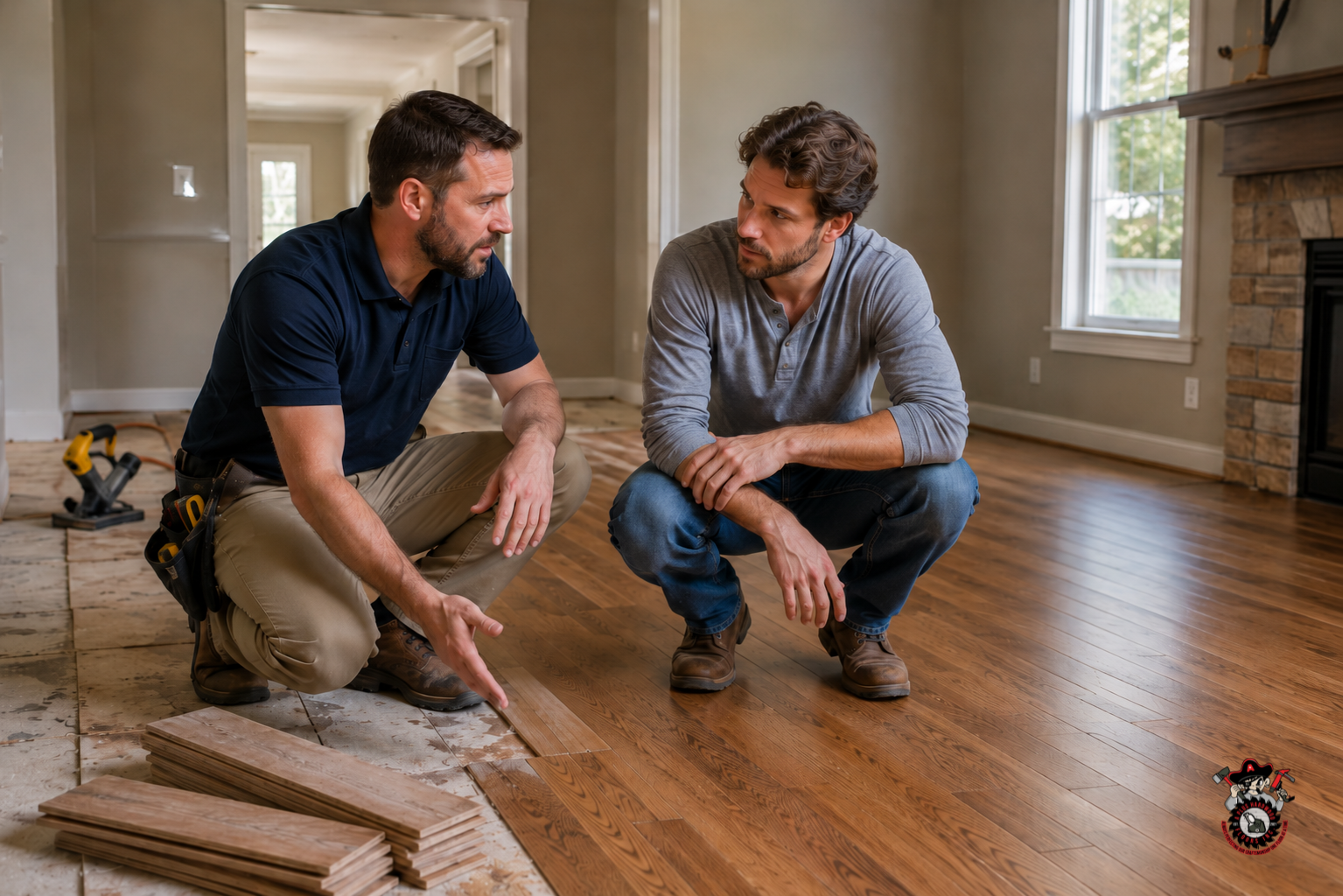
Before approving any hardwood project, ask your contractor how they’ll inspect the subfloor. A quality company should explain how they test for moisture, check for flatness, and spot damaged sections. If the installer is only focused on the visible flooring, that’s a red flag.
Good communication here sets realistic expectations. Sometimes a project needs more prep work than initially planned, especially in older homes. That’s not a setback—it shows the contractor is protecting the final quality of the installation.
Make Sure the Room is Ready
Homeowners can help by getting the space ready in advance. Move furniture, confirm access, and ensure the room can maintain a stable temperature and humidity during acclimation and installation. If other work is happening, like interior painting or drywall repair, schedule those tasks so dust and moisture don’t interfere with the flooring process.
Coordination matters because installation quality depends on the whole environment, not just the materials. A clean and stable workspace reduces delays and helps the crew maintain a professional workflow from start to finish.
Subfloor Prep Tips for Contractors
Follow Manufacturer and Industry Standards
Professional installers should always follow the hardwood manufacturer’s instructions, adhesive guidelines, and recognized industry standards. These documents aren’t suggestions; they provide the tolerances and conditions needed for warranty compliance and durable performance. When in doubt, the stricter requirement should usually win.
Contractors who keep up with current standards build stronger reputations because they reduce avoidable failures. Staying informed also helps teams adapt to new products, like advanced underlayments and improved repair materials, shaping the flooring industry.
Document Everything Before Installation
Documentation is often overlooked in subfloor prep. Moisture readings, flatness measurements, product batch numbers, and repair notes can all be useful if questions arise later. Clear records protect both the contractor and homeowner, especially in challenging environments or older constructions.
In commercial settings, documentation is even more valuable. Businesses needing durable solutions might combine hardwood with other materials, including commercial flooring or epoxy flooring, depending on traffic and maintenance needs. Good prep practices transfer across many flooring types, not just hardwood.
Conclusion: The Floor You See Depends on the Work You Don’t
Why Preparation is Worth the Time
Subfloor preparation might not be the most visible part of a hardwood project, but it’s one of the most important. A clean, dry, flat, and stable subfloor helps prevent squeaks, gaps, warping, and premature wear. It also boosts the appearance, comfort, and long-term value of the floor.
When homeowners and contractors treat preparation as a priority, the installation becomes more predictable, and the final result looks better for longer. That’s true whether the project is a new build, a renovation, or a repair after moisture damage. The time spent below the surface is what makes the surface above it shine.
Work with a Team that Values the Details
If you’re planning a hardwood project and want a result that lasts, choose an installer who knows that preparation is part of the craft. At A Plus Hardwood Floors Inc., our team focuses on the details that protect your investment and help your flooring perform beautifully over time. From inspection to leveling to final installation, every step matters.
To learn more about our approach or discuss your next project, explore our hardwood flooring services, or contact our team for expert guidance. A strong floor starts with a strong foundation, and we’re here to help you build both.