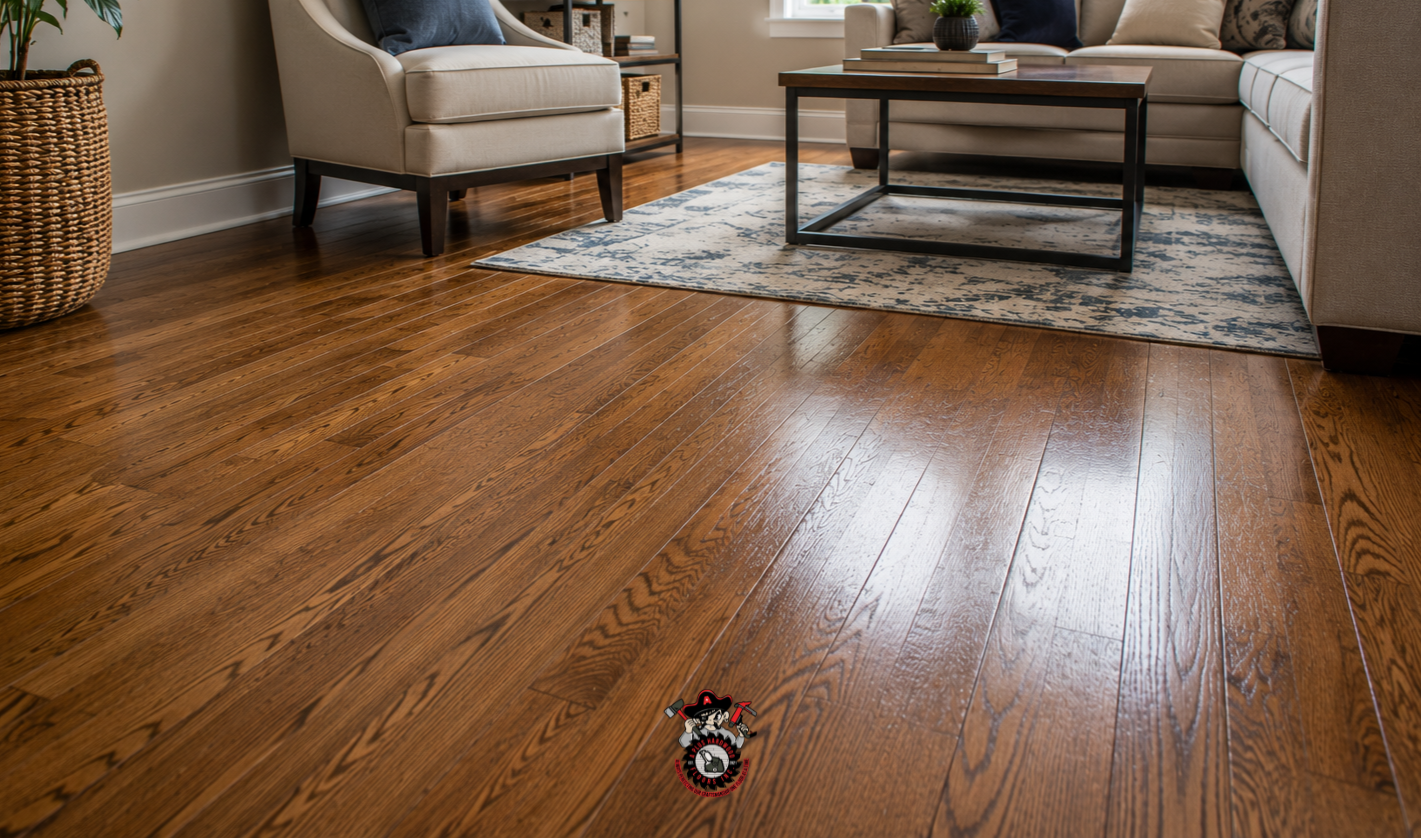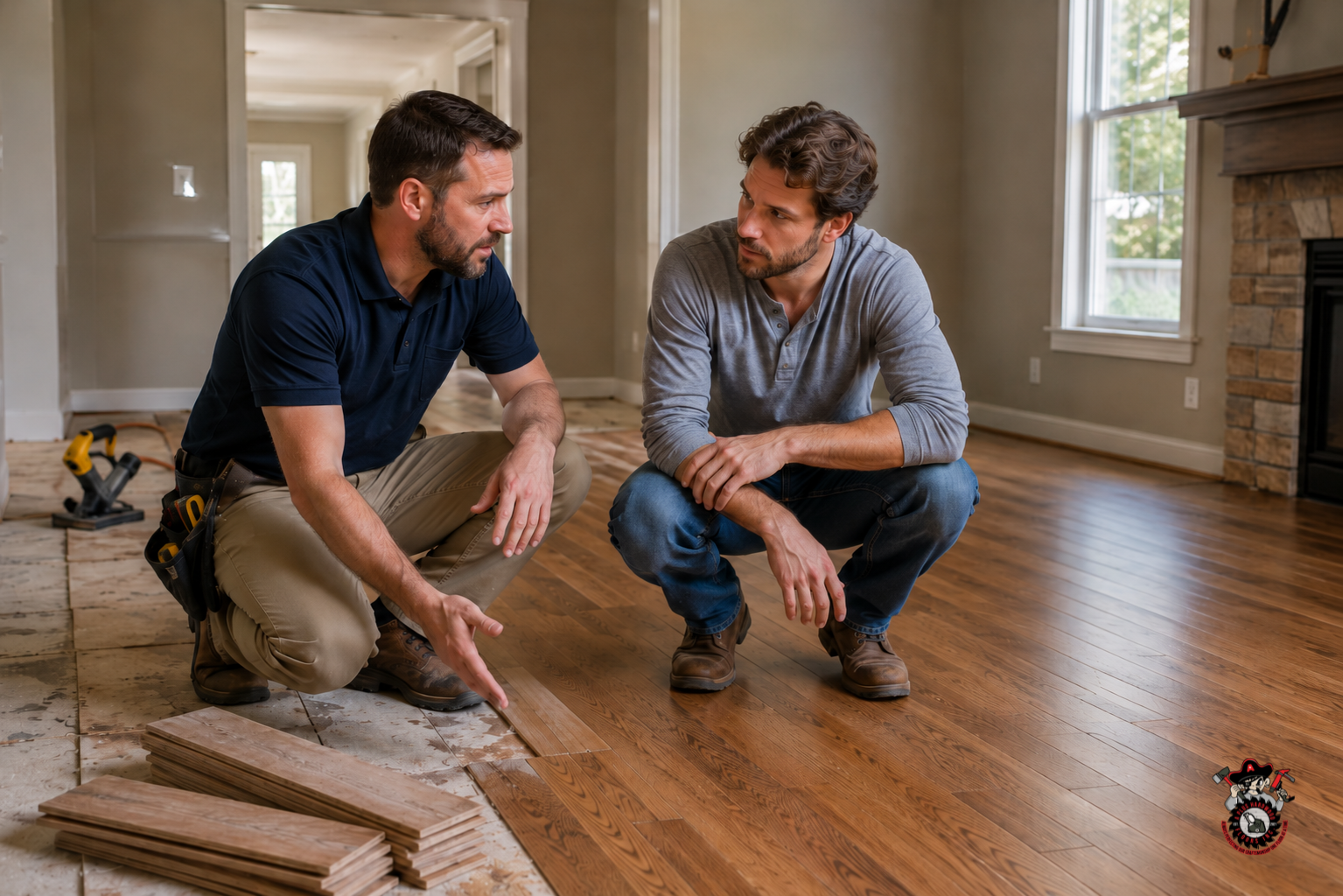
Hardwood floors are a top choice for many homeowners, thanks to their timeless beauty and durability. But here's the catch: how long they last and stay beautiful largely depends on how they're installed. If done right, hardwood floors can look great and last for decades. But if they're rushed or poorly done, even the best materials can start showing problems like gaps, squeaks, or warping way earlier than you'd expect. Let's dive into why installation is so crucial, what good installation looks like, and how you can protect your floors from day one.
If you're weighing your flooring options or planning a new project, it's worth knowing how hardwood stacks up against other materials and why skilled installation matters. For broader planning, check out our hardwood flooring solutions and our guide on flooring installation planning. These resources can show you how a well-executed project starts long before the first plank is laid.
According to the U.S. Department of Energy, changes in indoor humidity can impact many building materials, including wood, which is why installation and climate control should work hand in hand. You can read more about moisture and building performance from the U.S. Department of Energy’s Energy Saver resources. Proper installation is more than just a final step; it's the groundwork that ensures hardwood floors perform as intended.
Why Proper Hardwood Floor Installation Matters
Installation determines structural stability.
Hardwood is a natural material, so it reacts to changes in temperature, moisture, and everyday use. If the boards are laid over an uneven surface or without enough time to settle, the floor might move in unexpected ways. Over time, this movement can stress the joints, loosen fasteners, and cause visible defects that shorten the floor's lifespan.
Proper installation starts with a stable foundation. The subfloor should be clean, dry, and level, ensuring the hardwood can sit evenly and distribute weight properly. This reduces stress on each board and helps the floor maintain its shape, appearance, and performance for years.
It protects the appearance of the wood.
Even high-quality wood can look disappointing if the installation is poor. Uneven plank spacing, inconsistent alignment, or improper nailing can interrupt the natural grain pattern and reduce visual appeal. Since hardwood is often selected for its beauty, installation mistakes can undermine one of the main reasons homeowners choose it in the first place.
Professional installation helps preserve the clean, seamless look that makes hardwood so attractive. Boards are arranged with attention to color variation, plank orientation, and expansion needs, creating a finished floor that feels intentional and polished. This kind of attention to detail supports both beauty and longevity.
It reduces long-term repair costs.
Many homeowners focus on upfront cost, but hardwood flooring is a long-term investment. When installation errors create future problems, the cost of correcting them can be much higher than doing the job right the first time. Repairs may require board replacement, sanding, re-fastening, or even partial removal.
Industry data consistently shows that hardwood floors can last 25 to 100 years, depending on species, finish, traffic, maintenance, and installation quality. That wide range reflects how important the original installation really is. A floor that starts well is far more likely to stay in the upper end of that lifespan range.
The Most Important Steps in a Long-Lasting Installation
Start with subfloor preparation.
Subfloor preparation is one of the most important parts of the process. A clean and level subfloor helps prevent squeaks, hollow spots, and movement after installation. If the surface contains debris, moisture, or uneven areas, the hardwood may not bond or fasten correctly.
For more details on this critical stage, homeowners can review our subfloor preparation tips for hardwood floors. In many projects, this step determines whether the floor will perform beautifully or develop issues later. Professional flooring teams also use moisture testing and leveling tools to ensure the surface is ready before any planks are installed.
Allow proper acclimation time.
Acclimation gives wood time to adjust to the home’s temperature and humidity before installation. Most experts recommend allowing hardwood planks to acclimate for at least 48 to 72 hours, though some conditions may require more time. Skipping this step can cause planks to expand or contract after installation, which may lead to gaps, cupping, or buckling.
This matters especially in climates with seasonal shifts. The flooring industry continues to emphasize acclimation because the wood needs to reach a stable condition before it is secured in place. If homeowners want to prevent future movement, this is one step they should never rush.
Leave the right expansion gaps.
Wood naturally expands and contracts with humidity changes, so perimeter expansion gaps are essential. These gaps allow the floor to move without pushing against walls or fixed objects. Without them, pressure builds inside the floor system and can result in buckling or edge damage.
The right gap size depends on the product, room size, and manufacturer guidelines. A professional installer will account for these variables and avoid common mistakes like tight perimeter fitting or improper trim coverage. This detail may be invisible after completion, but it plays a major role in the floor’s long-term health.
Engineered Hardwood and Modern Installation Trends
Why engineered hardwood has become so popular
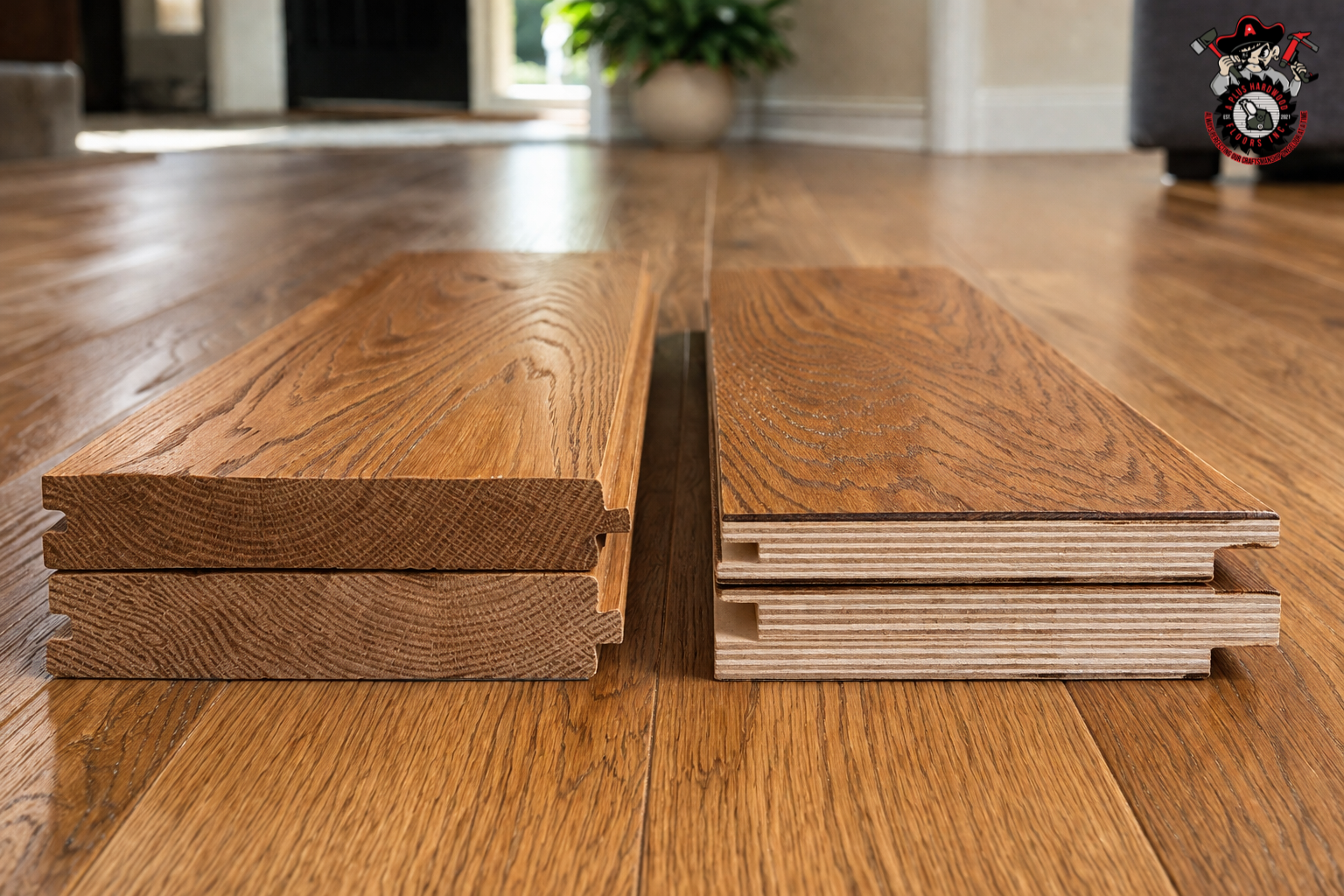
One of the biggest trends in flooring is the growing popularity of engineered hardwood. This product uses a layered construction that improves dimensional stability and makes it more resistant to environmental changes than traditional solid wood. As a result, engineered hardwood can be a strong choice for many homes and installations where moisture fluctuations are a concern.
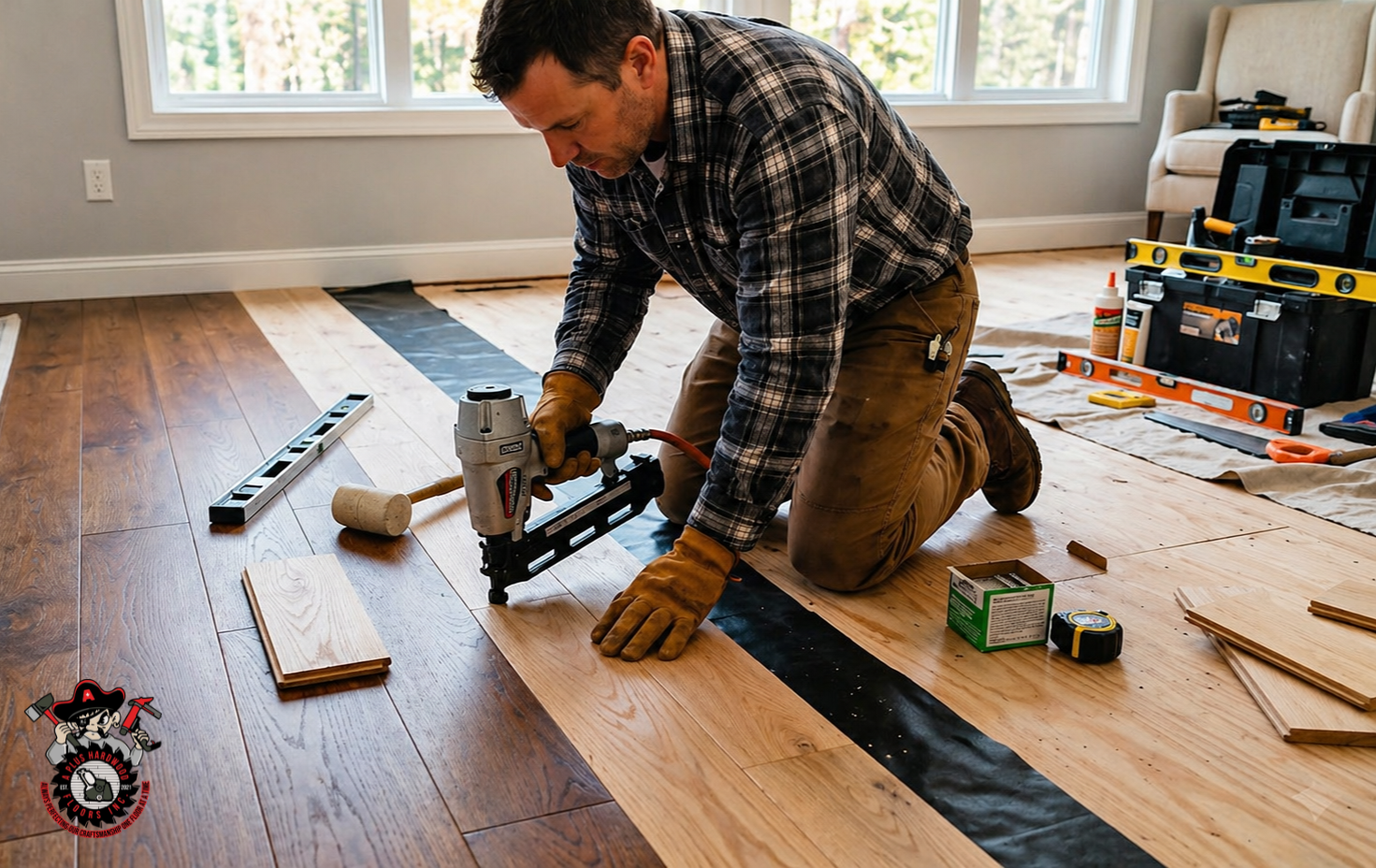
Because engineered products behave differently from solid hardwood, installation methods must also be adapted. Floating, glue-down, and nail-down methods may all be appropriate depending on the material and room conditions. Choosing the right method is just as important as choosing the right wood species.
Installation methods must match the product.
Not every hardwood product should be installed the same way. Solid wood often requires different fastening and environmental considerations than engineered wood. If the installer uses the wrong method, the floor may shift or fail sooner than expected.
For homeowners comparing materials, our custom hardwood flooring trends and tips article offers helpful insight into modern design and product choices. The right installation technique should always match the product, the subfloor, and the room’s conditions for the best long-term result.
Industry standards continue to evolve.
Flooring standards change as materials and technology improve. Manufacturers now provide detailed installation specifications because they know even small deviations can affect performance. Staying current with these recommendations helps protect warranties and improve long-term durability.
For homeowners who want an authoritative overview of wood flooring standards and best practices, the National Wood Flooring Association is a useful educational resource. It explains how proper procedures support both appearance and longevity. Following updated best practices is especially important when choosing engineered hardwood or installing flooring in homes with variable humidity.
Common Installation Mistakes That Shorten Hardwood Floor Life
Ignoring moisture levels
Moisture is one of the biggest threats to hardwood flooring. If the subfloor is too wet or the home has uncontrolled humidity, wood can swell, warp, or separate. Moisture issues are often invisible during installation, which is why testing is so important before work begins.
Homeowners in regions with seasonal humidity shifts should take this seriously. If moisture is not controlled, even the best materials will struggle to stay stable. That is one reason professional installers often recommend pairing installation with climate management strategies and ongoing monitoring.
Rushing the prep work
Some of the most expensive flooring problems begin with shortcuts during prep. A floor may look fine on installation day, but tiny uneven areas or leftover debris can create major issues over time. Those problems may show up as creaks, loose boards, or a floor that feels inconsistent underfoot.
In our experience, careful prep work is one of the clearest differences between average and excellent flooring results. Proper cleaning, patching, leveling, and testing take time, but they create the stable conditions needed for long-term performance. The goal is not just to install a floor quickly, but to install it correctly.
Improper fastening or adhesive use
Fasteners and adhesives must be selected carefully based on the product and subfloor type. If the wrong nail pattern or adhesive system is used, boards may loosen or produce noise. In some cases, improper fastening can also compromise warranty coverage.
Professional installers know how to match the fastening system to the project conditions. They also understand how board length, plank width, and room layout influence the installation approach. These details may seem small, but they are crucial to the long-term success of the floor.
How Professional Installation Extends Hardwood Floor Longevity
Experience helps prevent avoidable problems.
Experienced installers spot issues that homeowners might miss. They can identify subfloor problems, climate concerns, material defects, or layout challenges before the installation begins. That kind of foresight helps prevent expensive problems later.
This is one reason many homeowners choose professional flooring installation services rather than attempting a full DIY project. A skilled crew brings process, precision, and product knowledge to every stage. When those elements work together, the floor is far more likely to last for decades.
Professional work protects the warranty.
Many hardwood manufacturers require specific installation conditions to keep warranties valid. Those requirements often include acclimation, moisture testing, expansion gaps, and approved fastening methods. If the product is installed incorrectly, the warranty may not cover future damage.
That is a major reason to work with a contractor who understands both craftsmanship and compliance. When the floor is installed according to manufacturer standards, the homeowner gains peace of mind and better long-term protection. In practical terms, that can save both money and frustration later.
Better results lead to a better lifespan.
A professionally installed floor typically performs better because each layer of the system is addressed carefully. The subfloor is prepared, the wood is acclimated, the planks are laid correctly, and the finishing details are handled with care. Those steps create a stable platform that supports the floor through seasonal changes and everyday use.
For homeowners who may later need maintenance or restoration, our hardwood floor refinishing and resanding services can help extend the life of a floor that has already been properly installed. A strong installation makes future maintenance more effective because the underlying structure remains sound.
Real-World Example: Why Two Similar Floors Age Differently
A case study in installation quality
One useful real-world example comes from a case study referenced by flooring professionals, where two identical hardwood floors were installed in similar homes but with different levels of preparation. The floor that received proper acclimation, subfloor preparation, and professional installation remained stable and attractive over several years. The other developed gaps, buckling, and visible wear much sooner.
The lesson is simple: the product alone does not determine the outcome. Even premium hardwood can fail early if the system around it is not handled correctly. Installation quality is the difference between a floor that merely looks good at first and a floor that keeps performing for years.
Local climate makes a difference.
Climate is especially relevant in areas like Palatine, IL, where humidity can vary significantly across seasons. These changes can affect wood movement if the flooring system is not installed and maintained with care. That is why local knowledge matters when choosing an installer.
Homeowners can also benefit from reading our related article on humidity and hardwood floor care. When installation and humidity management are aligned, the floor is much more likely to stay flat, tight, and beautiful over time.
Maintenance Starts with Installation
A good floor is easier to care for
Maintenance matters, but it is much easier when the floor was installed correctly in the first place. A properly installed hardwood floor is less likely to have structural movement, uneven wear, or recurring problem areas. That means routine cleaning and humidity control can do their job more effectively.
This is why installation should be viewed as the starting point of maintenance, not separate from it. A strong foundation makes future sanding, refinishing, and repair more predictable. In contrast, a floor with hidden installation issues may require more frequent intervention.
Cleaning routines work better on stable floors.
When boards sit evenly and securely, everyday cleaning becomes simpler and safer. Sweepings, mopping, and dry dusting all help preserve the finish, but they are most effective when the floor is already stable. Loose boards or high spots can trap debris and accelerate wear in certain areas.
For homeowners considering other practical upgrades during a flooring project, related services like floor repairs, molding installation, and even carpentry can improve the overall result. These details help the finished space look complete while supporting the floor’s performance.
Humidity control remains essential.
Even a perfectly installed hardwood floor still needs the right environment. Keeping indoor humidity in a reasonable range helps reduce unnecessary expansion and contraction. This is especially important during heating and cooling seasons, when indoor air can become much drier or more humid than expected.
For general guidance on indoor air quality and moisture management, the U.S. Environmental Protection Agency’s indoor air quality resources provide useful background. Stable indoor conditions support stable hardwood floors, which is why installation and environmental control should always be treated as a team effort.
When to Call a Professional Flooring Contractor
DIY is possible, but not always wise
Some homeowners are comfortable with smaller DIY projects, but hardwood installation is a technical job with many points of failure. Measuring, acclimation, subfloor repair, fastening, layout planning, and expansion control all require precision. A small mistake can create a long-term problem that is expensive to fix.
That is why professional installation is often the smartest choice, especially for larger rooms, engineered products, or homes with moisture concerns. If you are planning a project and want help from a team with more than 25 years of experience, our floor removal and repair services can also support the preparation stage before new flooring goes in.
Professional guidance saves time and stress.
Working with an experienced contractor can simplify decision-making from start to finish. Professionals help you choose the right product, assess the subfloor, manage installation conditions, and finish the job with clean transitions and attention to detail. That support is especially valuable when a homeowner wants the floor to last as long as possible.
It also helps to connect flooring decisions with the rest of the home. For example, projects involving interior painting or drywall repair can be coordinated to reduce disruptions and complete the space more efficiently. A well-planned project is usually a better project.
Expertise matters for long-term value.
Ultimately, the goal is not just to install a beautiful floor today, but to protect the home’s value over time. Quality installation supports durability, reduces complaints, and improves the overall ownership experience. That is true in homes, rental properties, and commercial settings alike.
For businesses needing durable performance at scale, our commercial flooring solutions offer options built for demanding environments. Whether the project is residential or commercial, the principle remains the same: the quality of installation largely determines how well the floor will age.
Frequently Asked Questions About Hardwood Floor Longevity
How long do hardwood floors last?
With proper installation and maintenance, hardwood floors can last several decades, and some can last up to 100 years. The exact lifespan depends on the wood species, finish, foot traffic, humidity conditions, and how well the floor was installed. A well-built floor has a much better chance of reaching the upper end of that range.
Can I install hardwood floors myself?
DIY installation is possible, but it carries risk if you do not have the right tools or experience. The biggest concerns are subfloor preparation, moisture control, and expansion planning. Professional installation is recommended if you want the best chance of long-term success and fewer future repairs.
What are the signs of improper installation?
Warning signs include visible gaps, squeaking, uneven surfaces, buckling, cupping, and boards that move underfoot. These issues often point to a problem with prep work, moisture balance, or fastening. If you notice any of these symptoms, it is important to have the floor evaluated quickly before the damage spreads.
Is engineered hardwood easier to install?
Engineered hardwood can be more dimensionally stable, but that does not mean installation is simple. The process still requires proper prep, correct installation method, and attention to the manufacturer’s instructions. In many cases, the product is forgiving, but only when it is installed correctly.
Conclusion: Installation Quality Is the Key to Long-Lasting Hardwood Floors
Hardwood floors can be one of the longest-lasting and most rewarding features in a home, but only when the installation is done right. Proper subfloor preparation, acclimation, expansion gaps, moisture control, and product-specific methods all work together to protect the floor’s structure and beauty. When those steps are handled carefully, the flooring is more likely to stay attractive, stable, and comfortable for many years.
The research is detailed, and the industry consensus is strong: installation quality has a direct impact on hardwood floor longevity. If you are planning a project, investing in professional expertise now can prevent major problems later. For trusted help from a flooring contractor in Palatine, IL, explore our services, review our local flooring service area, or contact A Plus Hardwood Floors Inc. for a consultation. A strong floor starts with a strong installation, and that is where long-term value begins.
Ready to protect your investment? Reach out today to discuss your hardwood flooring project and get expert guidance tailored to your home, budget, and long-term goals.